When a Pump Fails, Everything Stops:
Picture this: a production line at a chemical plant comes to a sudden halt. Engineers scramble. Hours pass. The cause? A pump that was either wrongly selected, poorly operated, or simply misunderstood.
This isn’t rare. Pump failures cost industries millions of dollars every year — in downtime, repairs, and wasted energy. And most of the time, the root cause isn’t a faulty machine. It’s a knowledge gap.
Whether you’re an engineering student stepping into your first internship, a technician on the floor, or a professional looking to sharpen your edge — understanding pump fundamentals is one of the most practical skills you can build.
👉 Start learning Mastering pump course here: https://trk.udemy.com/DW3L12
👉 Get full subscription access: https://trk.udemy.com/PzKGrq
What You’ll Actually Learn:
Pump knowledge isn’t just for specialists. Here’s a quick breakdown of what the core topics cover:
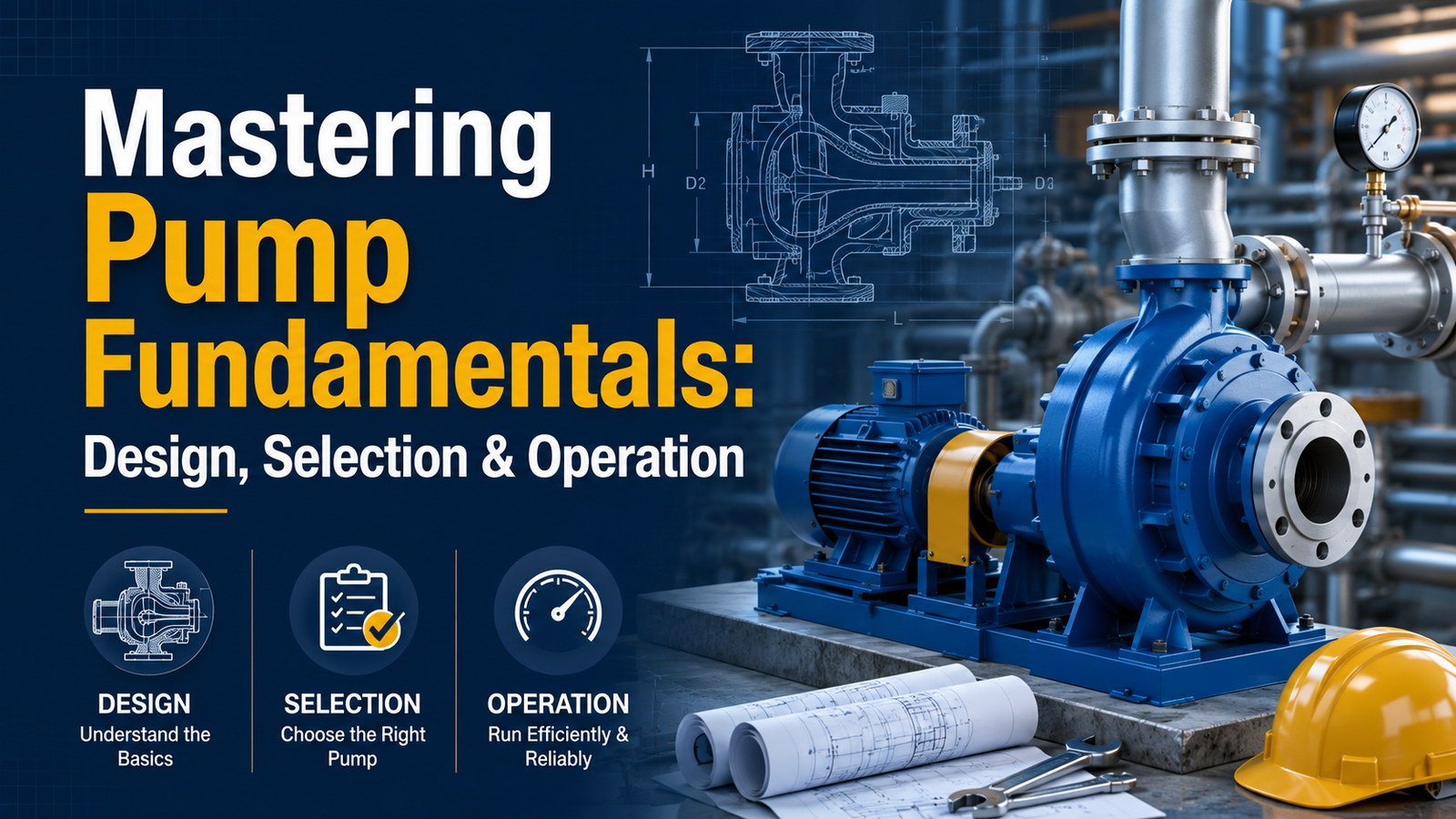
- Pump Design Basics: Understanding how a pump is built — its impeller, casing, shaft, and seals — helps you know what can go wrong and why. Even basic knowledge of centrifugal pump basics gives you a head start over most beginners.
- Pump Selection Guide: Choosing the right pump for the right application is a science in itself. Flow rate, head pressure, fluid type, viscosity — all of these matter. A wrong selection leads to either an oversized pump burning energy or an undersized one constantly failing.
- Pump Operation & Efficiency: Operating a pump correctly means knowing startup procedures, monitoring performance curves, avoiding cavitation, and recognizing early warning signs. This is where real-world savings happen.
Why This Knowledge Actually Matters:
Industries like oil & gas, water treatment, power generation, and manufacturing all run on pumps. They’re everywhere — moving fluids, maintaining pressure, driving processes.
Professionals who understand pump design and operation don’t just fix problems faster. They prevent them. That means fewer emergency calls, lower maintenance budgets, and smoother plant operations.
From a career standpoint, pump operation training is one of those skills that hiring managers and plant supervisors genuinely value — because it directly impacts productivity and safety.
The savings can be significant too. Properly selected and maintained pumps consume less energy, need fewer replacements, and reduce unplanned downtime. These aren’t small wins on an industrial scale.
What Happens Without the Right Knowledge:
Here’s the reality — and it’s something experienced engineers see all the time:
- Wrong pump selection leads to flow issues, pressure problems, and equipment stress
- Energy inefficiency adds up fast when pumps run outside their best efficiency point
- Frequent breakdowns become the norm when warning signs go unrecognized
- High maintenance costs drain budgets that could go toward upgrades or expansion
The frustrating part? Most of these problems are avoidable with the right foundational knowledge.
🎓 A Course Worth Your Time:
If you’re serious about building solid pump knowledge, there’s a highly rated course on Udemy worth checking out:
This course walks you through everything from the ground up — pump types, design principles, selection criteria, hydraulic performance, and operational best practices. It’s structured for people who want practical understanding, not just theory.
What the course covers:
- Types of pumps and their applications
- Reading and using pump curves
- Pump selection based on system requirements
- Centrifugal pump basics and troubleshooting
- Energy efficiency and operational tips
Who it’s for: Engineering students, plant operators, maintenance technicians, and anyone entering the industrial or mechanical field.
⭐ What Students Are Saying:
- James R. — Engineering Student, Texas “I had zero background in pumps before this. The instructor breaks everything down so clearly. I finished the course before my internship and it genuinely helped me hold my own on-site.”
- Maria T. — Maintenance Technician, Ohio “I’ve worked around pumps for years but never fully understood the selection process. This filled in a lot of gaps. Practical, no fluff.”
- David K. — Mechanical Engineer, California “After taking this course, I was able to flag an efficiency issue at our plant that we’d been ignoring for months. The pump curve section alone was worth it.”
- Priya N. — Recent Graduate, New York “Great for beginners. I appreciated that it didn’t assume prior knowledge. I now feel confident talking about pump design basics in interviews.”
Who Should Take This Course?
This course is a strong fit if you are:
- A mechanical or chemical engineering student preparing for industry
- A maintenance engineer who wants to reduce breakdowns and improve response time
- A plant or field operator looking to understand the equipment you work with daily
- A beginner entering manufacturing, utilities, or oil & gas
You don’t need advanced math or engineering experience to get started. Just a willingness to learn.
Don’t Let a Knowledge Gap Cost You:
Pumps are foundational to almost every major industry. The engineers and technicians who understand them — truly understand them — are the ones who solve problems faster, get noticed, and grow their careers.
This course is a practical, affordable way to build that foundation. Whether you’re just starting out or filling in the gaps after years on the job, the knowledge pays for itself quickly.